Using data-driven insights to support healthcare staffing decisions in the U.S. Healthcare System in preparation of the Influenza season.
Context
This project simulates a real-world healthcare scenario in which a medical staffing agency must prepare for increased demand during influenza season.
The goal was to analyze historical health and demographic data to identify when and where additional medical staff would be needed across U.S. states.
Project Snapshot
Scenario
Healthcare staffing planning
Healthcare staffing planning
Objective
Optimize staff allocation during influenza season
Optimize staff allocation during influenza season
Role
Data analysis & insight development
Data analysis & insight development
Tools
Excel, statistical analysis
Excel, statistical analysis
The analysis required combining multiple datasets, evaluating seasonal patterns, and identifying risk indicators to support proactive staffing decisions under real-world constraints such as limited personnel and uneven regional demand.
The Question
Which states are likely to require increased medical staffing during influenza season — and what data signals can reliably inform those decisions?
Analytical Approach
The analysis combined multiple public health datasets, including influenza mortality data and U.S. Census population estimates. After profiling and cleaning the data, I integrated the sources into a unified dataset aligned at the state level.
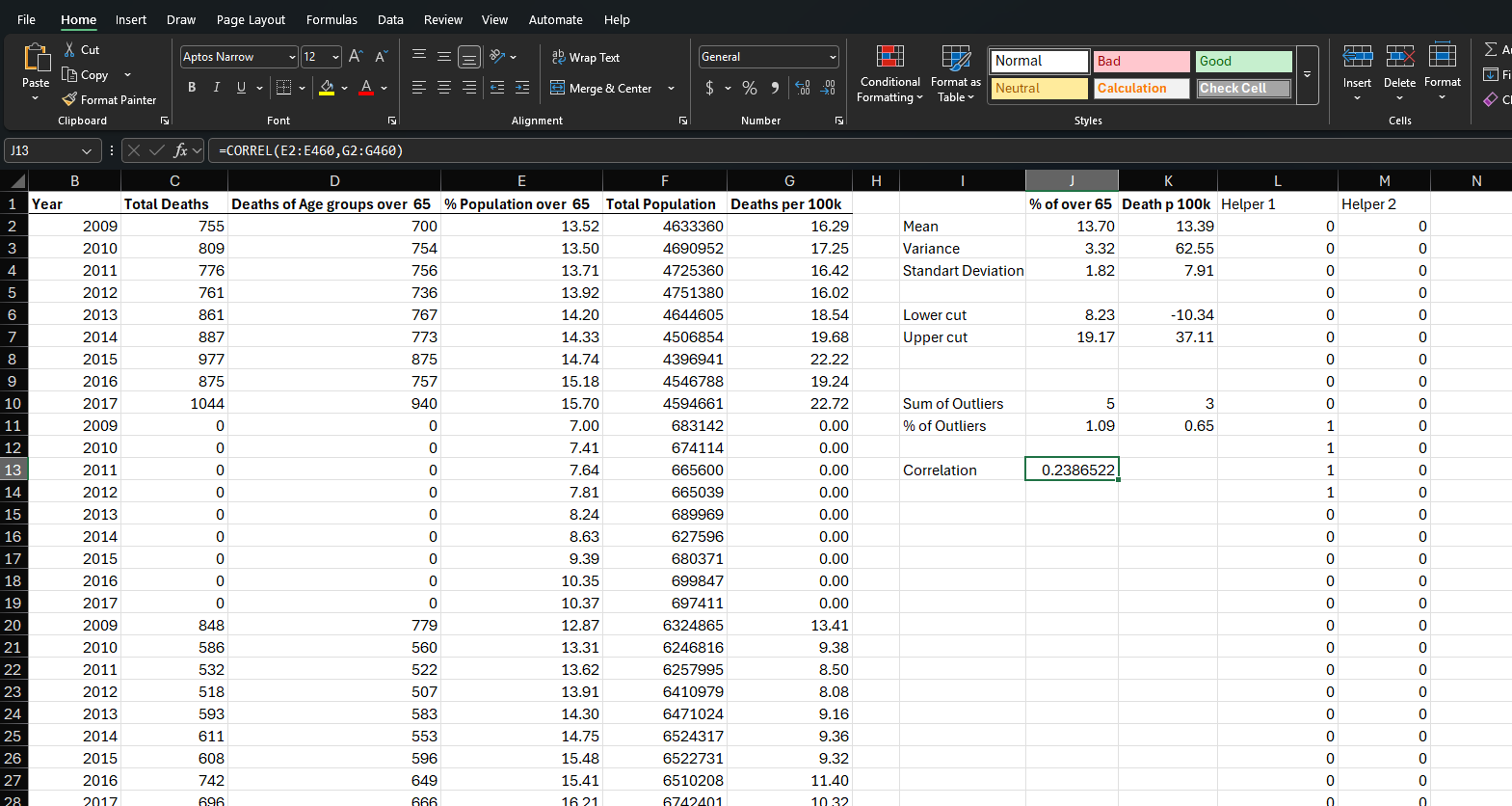
To evaluate risk patterns, I focused on the relationship between demographic structure and influenza outcomes.
To evaluate risk patterns, I focused on the relationship between demographic structure and influenza outcomes.
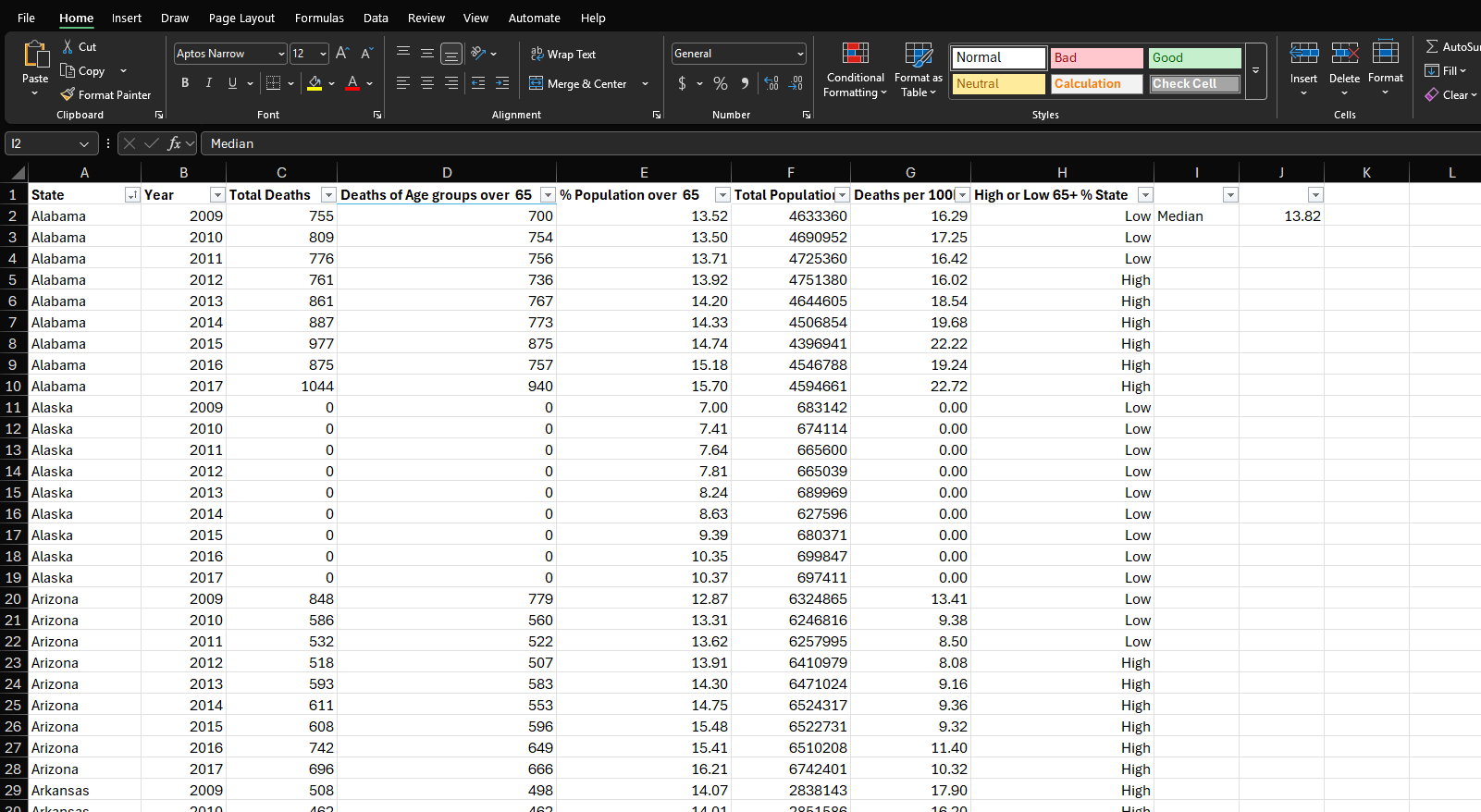
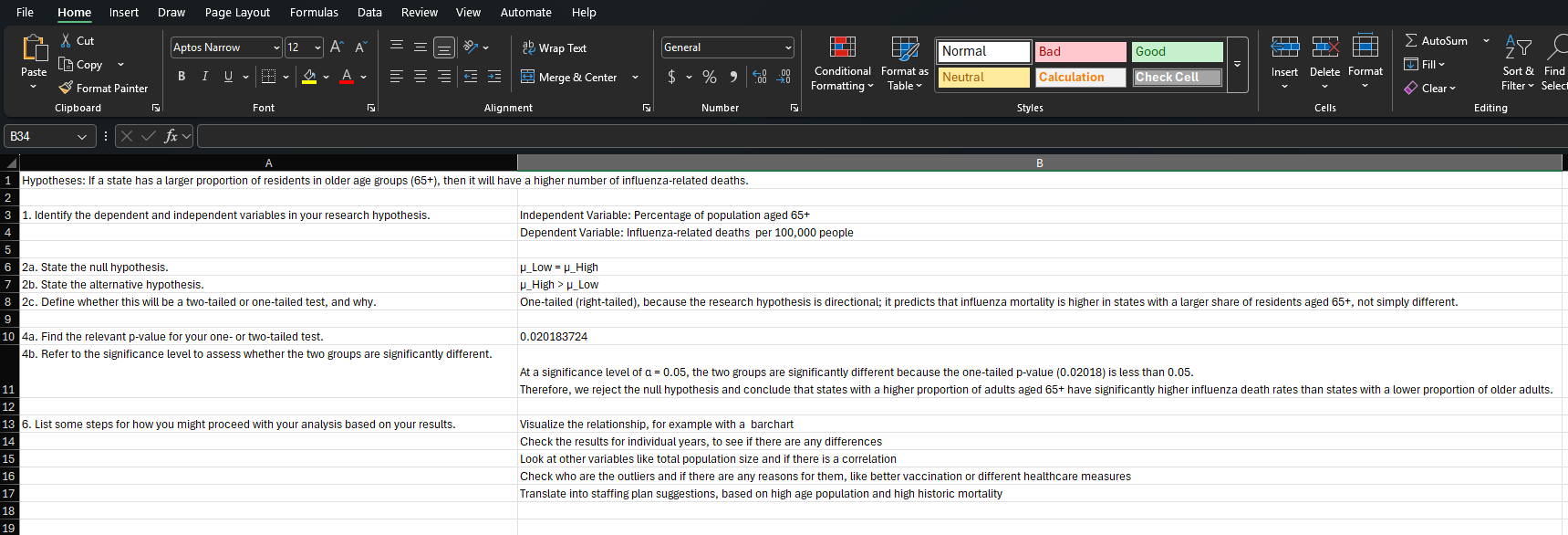
A key variable was the proportion of residents aged 65 and older, representing a vulnerable population group.
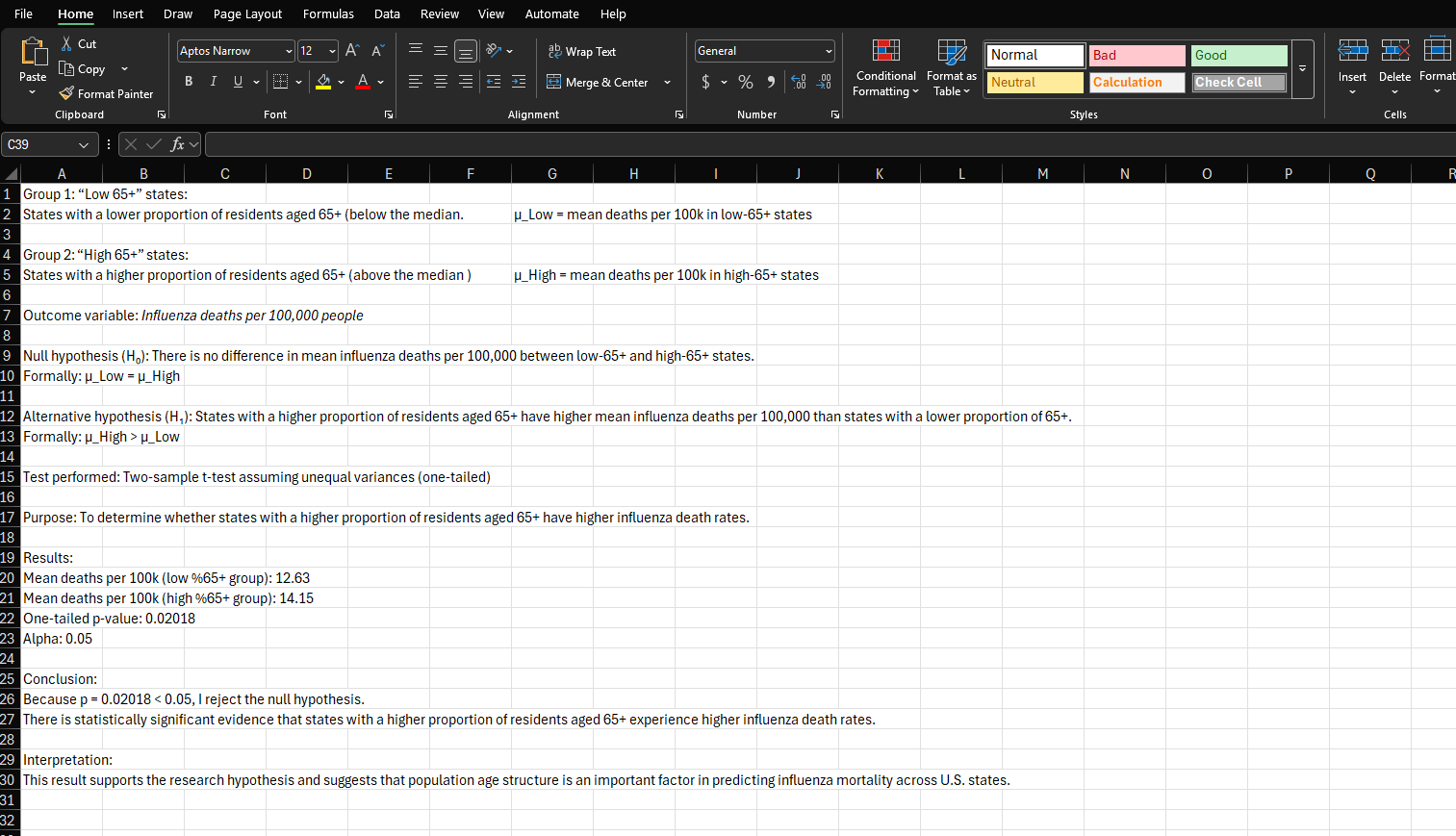
Descriptive statistics were calculated to understand variation across states, followed by correlation analysis and
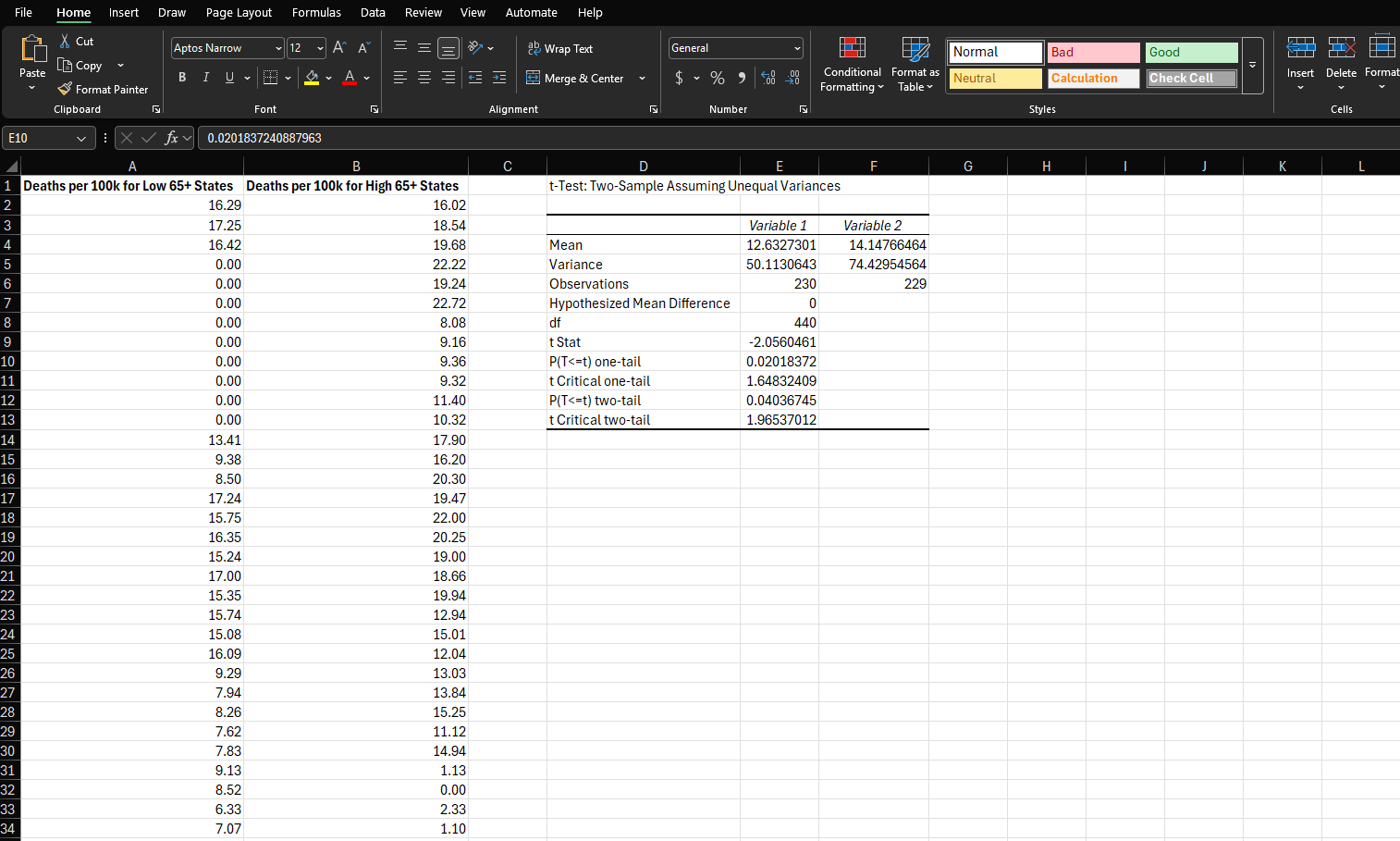
hypothesis testing to assess whether age structure significantly
impacts influenza mortality.
Key Findings
The analysis identified a measurable relationship between age demographics and influenza mortality. States with a higher proportion of residents aged 65 and older tend to experience increased mortality rates. While the correlation is moderate (0.24), statistical testing confirms that the difference between high-age and low-age states is significant, supporting the hypothesis that demographic structure influences influenza outcomes.
Operational Implications
These findings highlight that demographic composition is a meaningful indicator for healthcare demand during influenza season. States with older populations should be prioritized in staffing allocation strategies to reduce the risk of under-capacity during peak periods.
More broadly, the project demonstrates how data can support proactive resource planning in environments where demand fluctuates and resources are limited.
Skills Applied
This project reflects core competencies developed through a Data Analytics program, including data cleaning and profiling, exploratory data analysis, descriptive statistics, data visualization, and communicating insights to stakeholders. It also demonstrates my ability to structure business problems, test hypotheses, and translate analytical results into actionable recommendations.
Reflection
It strengthened my ability to connect statistical analysis with real-world decision-making, and reinforced the importance of combining technical rigor with clear communication, especially when working with stakeholders
who rely on data to guide operational strategy.
who rely on data to guide operational strategy.