
GameCo - Regional Sales Analysis (1980 - 2016)
Applying descriptive analytics to evaluate regional sales dynamics for marketing decision-making.
Context
The assignment simulated a real-world marketing scenario: analyzing historical video game sales data (1980–2016) to assess whether regional sales shares remained stable over time. The broader objective was to translate descriptive analytics into insights that could inform marketing allocation decisions.
Project Snapshot
Client Scenario
Simulated executive planning case
Simulated executive planning case
Role
Data analysis & insight development
Data analysis & insight development
Tools
Excel
Excel
Dataset
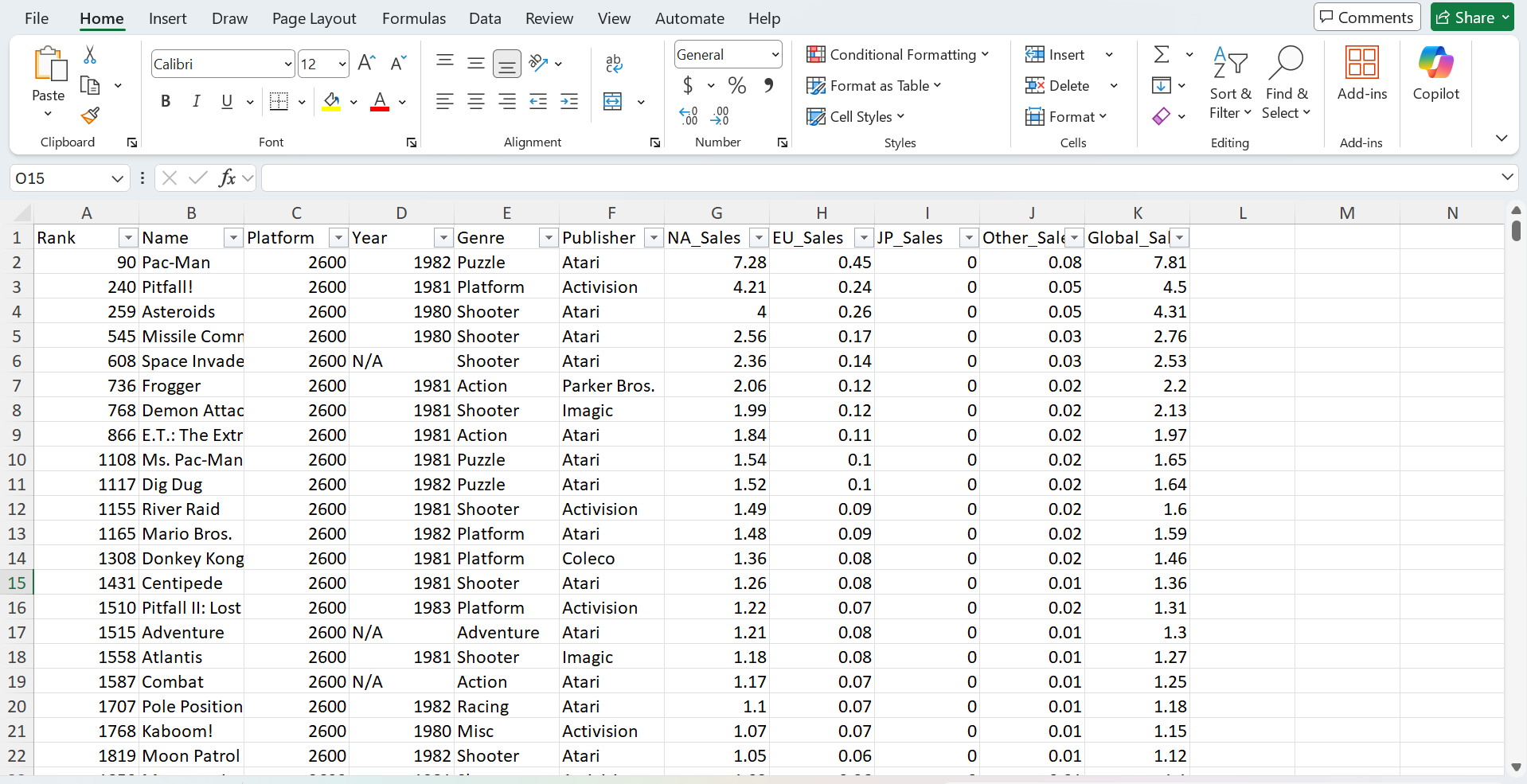
Regional unit sales (NA, EU, JP)
Regional unit sales (NA, EU, JP)
The task required structuring raw data at a yearly level to align with
annual marketing planning cycles followed by testing whether historical
regional splits could still justify future budget allocations.
annual marketing planning cycles followed by testing whether historical
regional splits could still justify future budget allocations.
The Question
Have North America, Europe, and Japan maintained the same share of global sales over time — or has the regional mix shifted in ways that would require marketing adjustment?
Analytical Approach
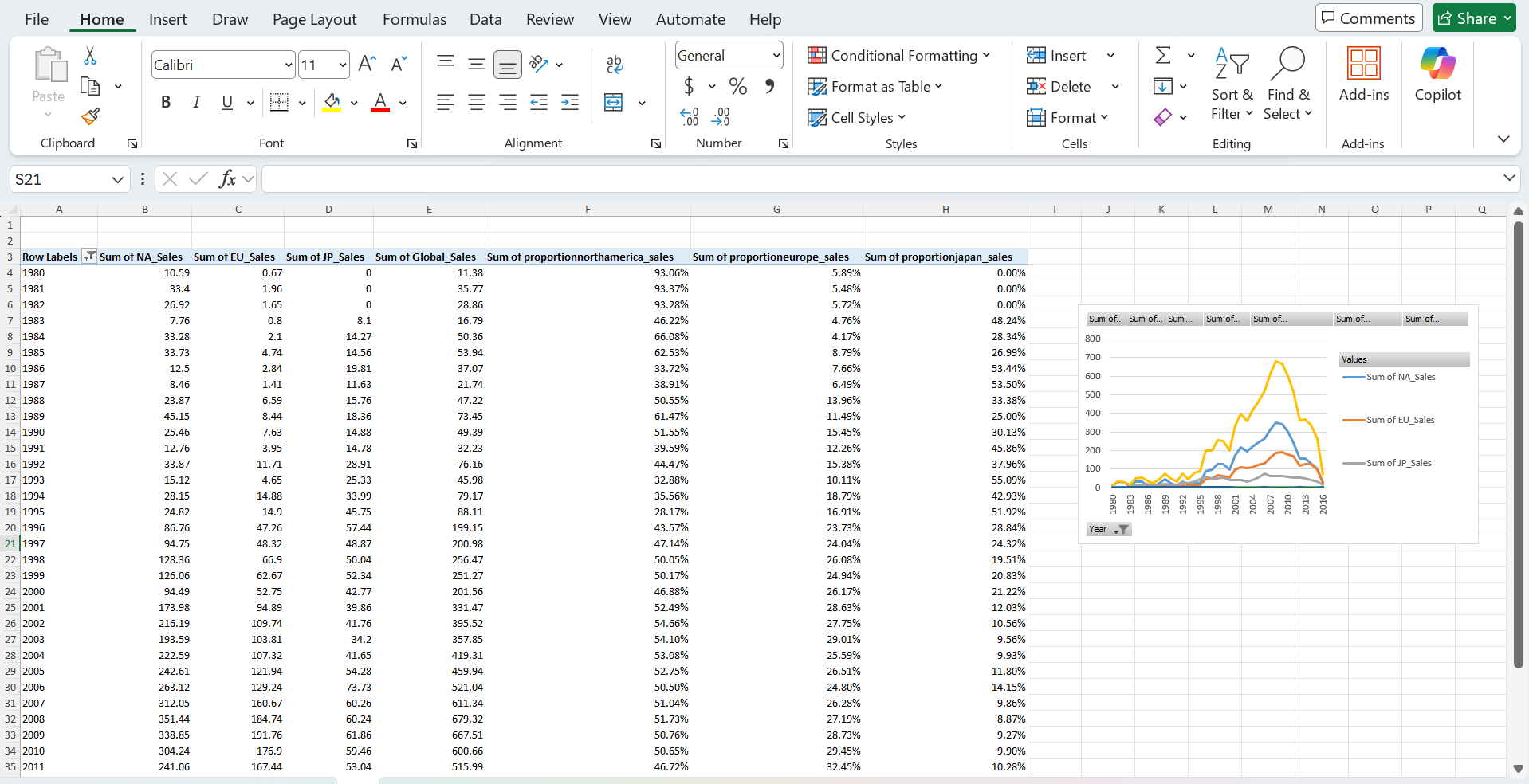
I first aggregated game-level data into yearly totals to reflect how executives review performance annually. I then engineered new variables calculating each region’s proportion of total global sales, enabling a direct comparison of relative market weight over time.
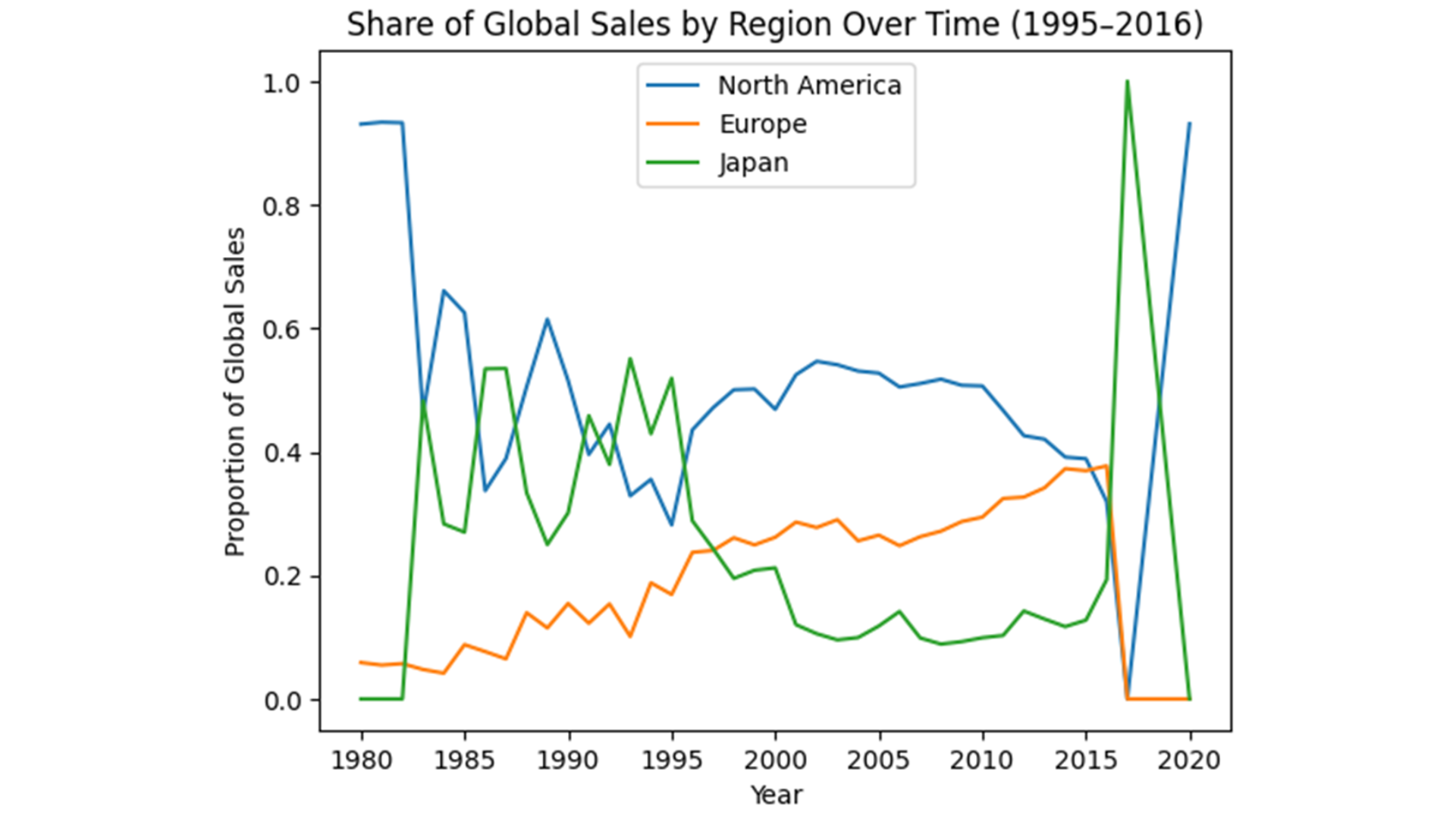
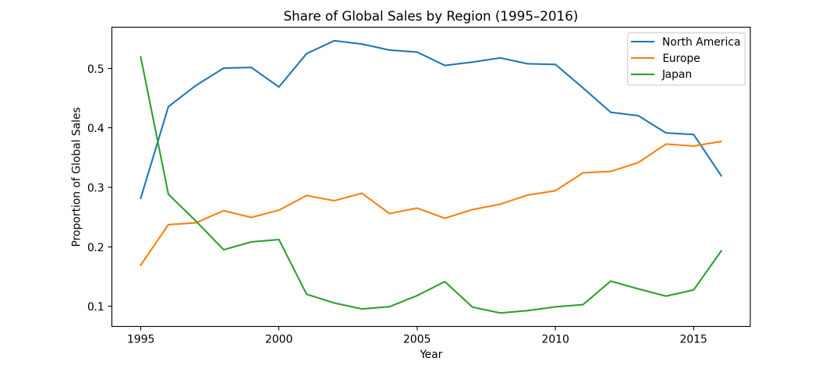
Trend visualizations were used to identify long-term shifts, followed by
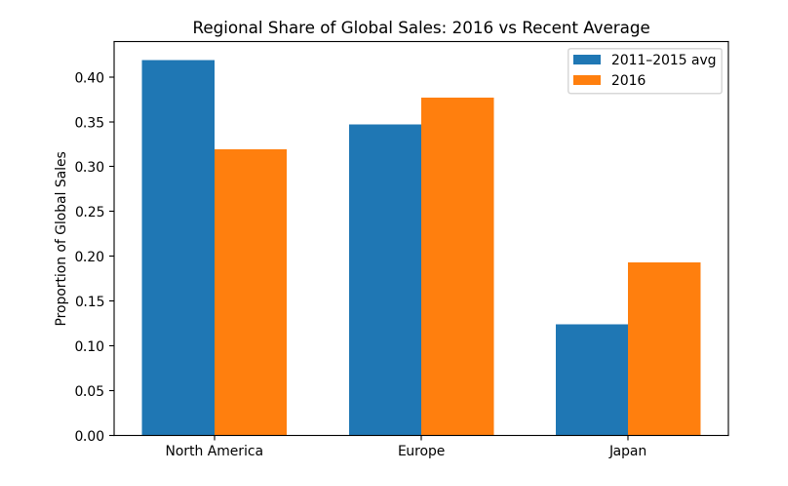
a benchmark comparison of 2016 against the 2011–2015 average to
simulate forward-looking decision support.
a benchmark comparison of 2016 against the 2011–2015 average to
simulate forward-looking decision support.
Key Findings
The analysis did not support the assumption of a stable regional sales mix. While North America remained the largest contributor overall, its proportional dominance declined in later years. Europe’s relative share increased steadily, and Japan displayed meaningful variation,
particularly in the most recent period.
These shifts suggest that static allocation strategies may not reflect evolving market dynamics.
particularly in the most recent period.
These shifts suggest that static allocation strategies may not reflect evolving market dynamics.
Marketing Implications
This project demonstrates how descriptive analytics can challenge embedded assumptions within marketing strategy. Rather than relying on historical fixed splits, regional budget allocation should be reviewed periodically using updated proportional data. Even small shifts in market composition can meaningfully affect long-term investment decisions.

Project Presentation